Stories

Wellbeing
When four hours feel like forty minutes
The deep dive where eating, drinking and everything else disappears. Why it feels so good, why the crash comes, and how to keep the fire without burning down the house.

Work
Three steps ahead, and alone there
When your mind reaches the end of the meeting before the meeting does. What that feels like, what it costs, and how to bring the room with you.

Story
The Owl in the Room: How the Non-Verbal Decoder Navigates Love
You caught your partner's real mood before they said a word. That's the Non-Verbal Decoder at work — and in love, it's both a superpower and a weight to carry.
Story
It's your mind, baby!
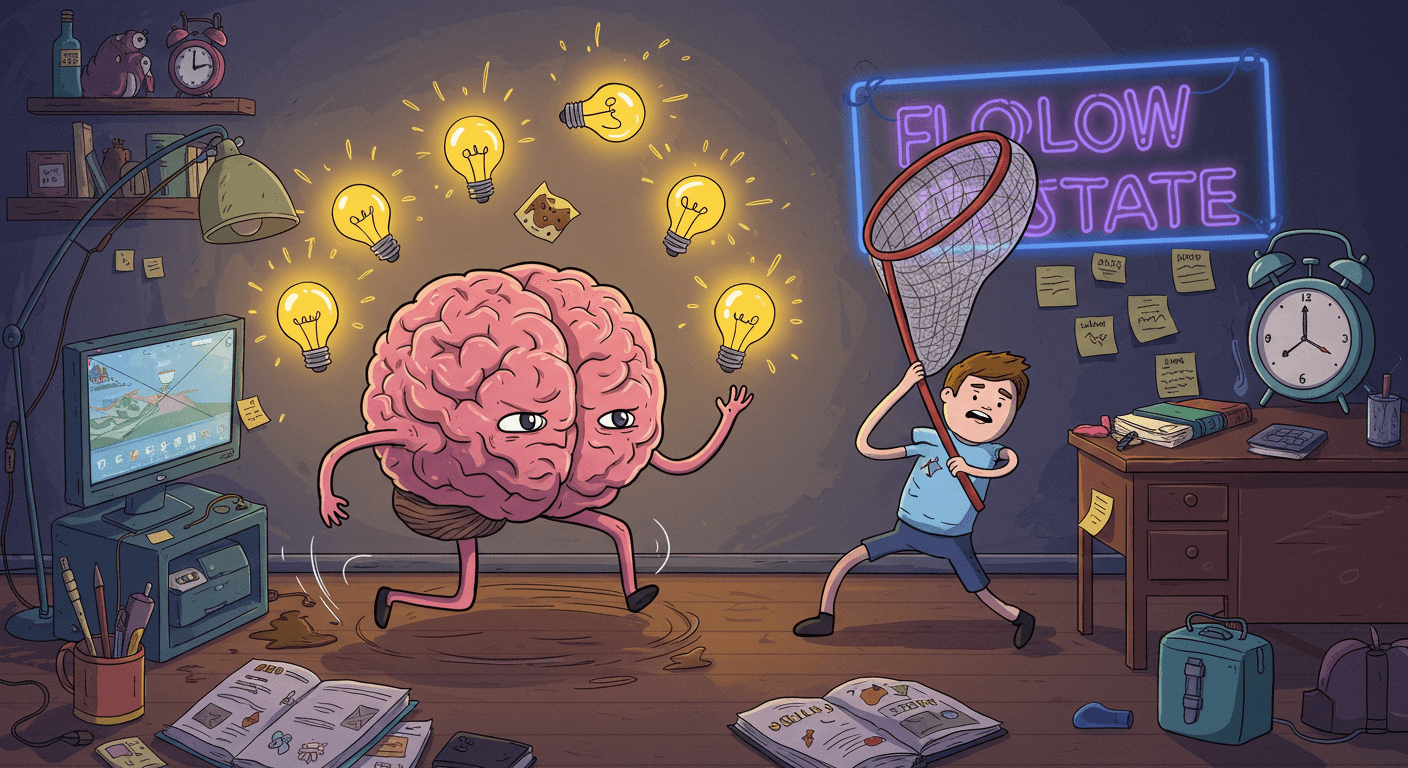
Your fast brain doesn't break rules — it follows its own, diving into flow states that produce brilliant work and vanish your to-do list at the same time. Time boxing, skipping work right after meals, and mapping your personal trigger points are three experiments worth running. Start today: write tomorrow's single goal on paper and put it somewhere you'll actually see it.

Story
Why a simple task can feel enormous and what to do about it
If you love complex tasks and have a fast brain, a small task can feel harder than a massive one. Not because you can't do it — you do it in two minutes. But then you don't trust that. Here is why that happens and what to do.